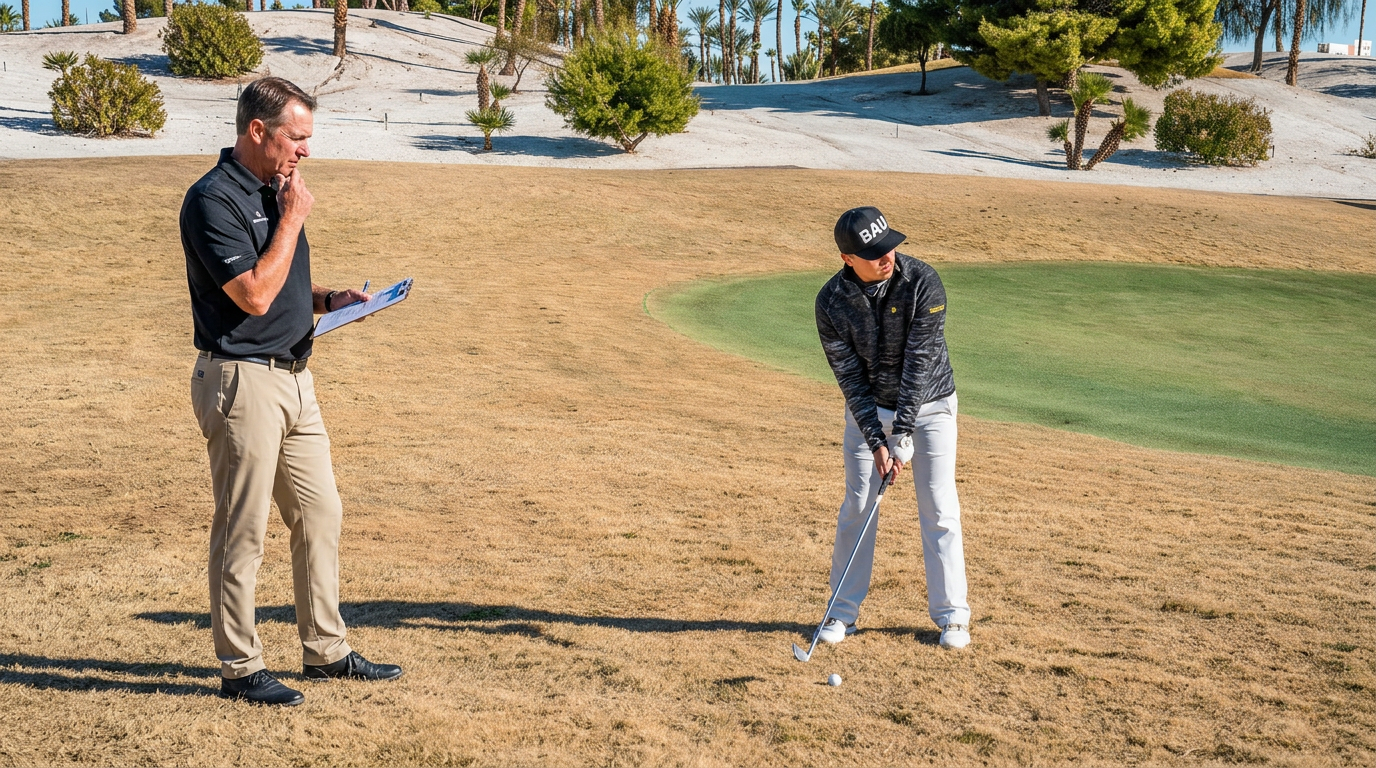
I see it all the time. A new golfer walks onto my range here at Balcones Country Club, a mix of excitement and nerves written all over their face. They’ve decided to take the plunge, to truly learn this game. But that first step, booking and showing up for your first golf lesson, can be the most intimidating part of the entire journey. You’re wondering what to wear, what to bring, and what on earth a coach is going to have you do for an hour. Let’s clear that up right now. Forget the mystery. Performance starts with a plan, and that includes your very first session. Your goal isn’t to look like a pro on day one; it’s to start the process of getting 1% better.
The Mental Game Starts Before You Arrive
The most important piece of equipment you can bring to your first lesson is your mindset. Most beginners in Austin come to me with one of two fears: the fear of looking stupid, or the fear of being told they’re hopeless. Let's put those to rest.
My team—Austin Lim, Steven Zavala, Sam Schmidt, and myself—have seen thousands upon thousands of swings. We haven't seen a perfect one yet, and we certainly don't expect it from you. Your job isn't to impress us. Your job is to be a sponge, ready to absorb one or two key concepts that will start you on the right path.
This is the first of our Three Pillars: Mind. Before you even pick out an outfit, commit to this:
* Be Open: You will hear things that contradict what your buddy told you or what you saw on YouTube. Trust the process.
* Be Patient: You won’t walk out striping it like a tour pro. You will walk out with a clear understanding of your number one priority and a specific drill to work on it.
* Be Honest: Tell me your real goals. Is it to beat your dad? To feel confident at a company tournament? To not embarrass yourself on a date at Butler Pitch & Putt? The more honest you are, the better I can tailor a plan for you. Your goal is our target.
Dressing for Performance, Not Just Appearance
Austin golf is played in a wide range of conditions, from breezy spring mornings in the Hill Country to scorching July afternoons. What you wear affects your ability to move and stay comfortable, which directly impacts your ability to learn. Think function first, fashion second.
Footwear: Your Connection to the Ground
Your feet are your foundation in the golf swing. You need stability.
* Ideal: Spikeless golf shoes. They look like athletic shoes but have a traction pattern designed for rotational force.
* Acceptable: Good-quality running shoes or cross-trainers. The key is a stable base and decent grip.
* Avoid: Boots, sandals, flip-flops, or old, worn-out shoes with no tread. You'll be slipping and sliding, and we won't get a true sense of your balance.
Apparel: Respecting the Game and the Weather
Most golf clubs, including our home at Balcones Country Club, have a dress code. It’s about respecting the tradition of the game. For beginner golf Austin players, this can be a point of confusion, but it’s simple.
* Tops: A collared shirt (a "polo") is the standard for both men and women. In the Texas heat, I strongly recommend a modern, moisture-wicking performance fabric. Cotton gets heavy and hot when you sweat. You want to be able to move freely.
* Bottoms: Golf shorts or pants (slacks) are perfect. For women, golf skirts or skorts are also common. Look for something with stretch.
* What NOT to Wear: Absolutely no denim, gym shorts, cargo shorts, sweatpants, or t-shirts. You’ll likely be turned away at a private or semi-private course. We want you to feel like you belong, and dressing the part is step one.
Sun Protection
This isn’t optional in Central Texas. A hat or a visor is crucial. It protects you from the sun and helps reduce glare so you can focus on the ball. Sunglasses and sunscreen are also highly recommended. Dehydration and sunburn will end a lesson faster than a bad swing.
What to Bring to the Range
You don’t need a brand-new, $3,000 set of clubs. In fact, for your first assessment, it can be better if you don't bring any at all.
Clubs (Optional): If you have clubs, bring them. Even if they're an old hand-me-down set, it gives me an idea of what you’re working with. If you don't* have clubs, do not go out and buy a set before your first lesson. That’s one of the biggest mistakes beginners make. We have plenty of clubs here at the BGP studio for you to use. Part of our process is helping you understand what kind of equipment will eventually fit you.
* Water: Bring a water bottle. Our facility has water, but it’s a good habit to get into. Hydration is a key part of the "Body" pillar.
* An Open Mind: I mentioned it before, and I'm mentioning it again. It's that important. Leave your preconceived notions in the car.
The BGP Assessment: What to Expect When You Arrive
So you’re dressed, you’re hydrated, and you have an open mind. You walk up to our state-of-the-art studio at Balcones Country Club. Here is exactly what will happen during your first 60-minute assessment. This isn’t a guy just watching you hit balls and throwing out random tips. This is a diagnosis.
Phase 1: The Interview (Mind)
We'll sit down and talk for 5-10 minutes. I want to know your history with the game, any other sports you play, any injuries or physical limitations you have, and—most importantly—what you want to achieve. This conversation sets the stage for everything that follows.
Phase 2: The Physical Screen (Body)
Next, we’ll run you through a basic TPI (Titleist Performance Institute) physical screen. Don't worry, it isn't a workout. It’s a series of simple movements that tells me how your body moves. Can you rotate your torso separately from your hips? How is your balance? Do you have tight hamstrings or locked-up shoulders?
This isn’t about judging your fitness. It’s about connecting your physical attributes to your golf swing. If you physically can't rotate your hips, I'm not going to tell you to "clear your hips." That's coaching malpractice. Instead, I'll give you a swing thought that works with your body, and maybe a simple stretch you can do at home. This is the foundation of building a swing that is yours, not a cookie-cutter model.
Phase 3: The Swing Analysis (Technique)
Now it’s time to hit a few balls. I'll likely have you start with a 7-iron. As you hit, we will be gathering objective data. Our studio is equipped with Foresight launch monitors that track everything from ball speed and launch angle to spin rate. Simultaneously, we're capturing your swing on high-speed video.
The combination of our Smart Analysis, the launch monitor data, and the physical screen gives us the complete picture. The video shows us what you're doing, the data shows us the result of what you're doing, and the screen tells us why you're doing it.
We will review the video together. I will show you, very clearly, the one or two things that are causing the most inconsistency. My goal is not to overwhelm you with a 10-point checklist. It’s to identify the root cause and give you a powerful priority.
Phase 4: The Plan
You will leave your first lesson with absolute clarity. You will receive an email summary of our session, including video with my voice-over analysis. You will have:
1. A clear understanding of your primary swing fault.
2. One simple feeling or thought to focus on.
3. One specific drill you can do at home or on the range to improve it.
That’s it. That’s how you get 1% better. You don't get better by trying to fix ten things at once. You get better by mastering one thing at a time. This is the start of your "Pathway," our 8-phase program designed to take you from beginner to a confident, competent player.
The journey in golf is a marathon, not a sprint. Your first lesson is simply the starting line. It's about establishing a baseline, building a relationship with a coach, and getting a clear, actionable plan that is customized to your mind and your body. Whether you want to eventually join our Virtual Academy for ongoing support or continue with in-person lessons, it all starts with this critical first step. Stop wondering and start doing.
Ready to build a better game? Book your initial assessment with me or one of our certified coaches at Beyond Golf Performance. Visit us at Balcones Country Club, give us a call at (737) 537-2117, or explore our online Virtual Academy to start your journey today. Let’s get to work.