I see it every year, right around mid-May. The dedication is there, the range bucket is full, but the Austin sun is just relentless. After about 20 minutes, focus starts to fade. The swing gets lazy, the grip pressure tightens up, and what started as a productive practice session turns into a battle for survival against the Texas heat. You're not getting 1% better; you're just getting heatstroke. Trying to grind on your game at a packed range when it’s 102 degrees out is a losing proposition. It’s a sure way to bake bad habits into your swing.
The Performance Killer You Can't See Coming
We talk a lot about the Three Pillars of performance: Mind, Body, and Technique. Extreme heat assaults all three simultaneously.
Your mind loses its edge. Decision-making becomes foggy. You can't stay present over the ball when your primary thought is finding a patch of shade. Your body suffers from dehydration and fatigue, leading to a loss of power and stability. I’ve seen TPI screenings that look great in March become a mess by July simply because the golfer’s physical state is compromised.
Most importantly, your technique falls apart. The sequence gets out of sync because your body is trying to conserve energy. The tempo quickens. You start making compensations that feel okay in the moment but are disastrous for long-term consistency. Hitting balls in the oppressive Hill Country humidity isn't practice; it’s an endurance test, and your scorecard is usually the first casualty.
Not All Indoor Golf is Created Equal
So, what's the answer when the weather outside is working against you? The obvious solution is to head inside. The search for "indoor golf Austin" or a "golf simulator Austin" will give you plenty of options, but here’s the critical distinction every serious golfer needs to understand: there's a world of difference between a simulator for entertainment and a simulator for performance improvement.
You have places that are essentially sports bars with hitting bays. They’re great for a night out with friends, a few beers, and some casual swings. There’s nothing wrong with that. But if your goal is to actually lower your handicap, that environment is full of distractions and the technology is often geared more toward gaming than granular analysis. You might get ball speed and carry distance, but it’s not the diagnostic tool you need.
To truly get better, you need a controlled environment built for one purpose: targeted improvement. You need a performance lab.
The BGP Lab: Where Data Meets Deliberate Practice
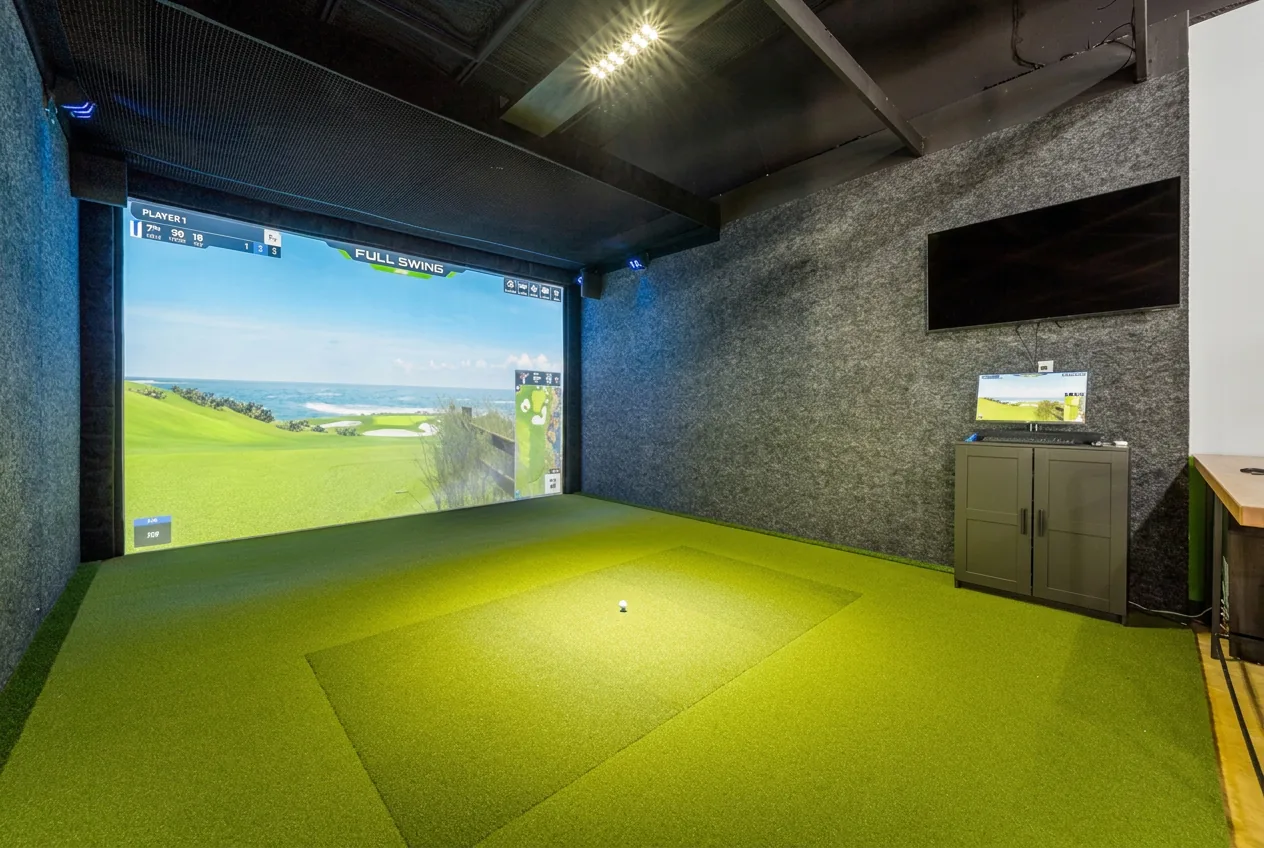
Here at our academy at Balcones Country Club, our indoor performance bays are not an afterthought; they are the core of our diagnostic process. This is what separates a true coaching environment from a place to just hit balls.
### The Technology: Foresight Launch Monitors
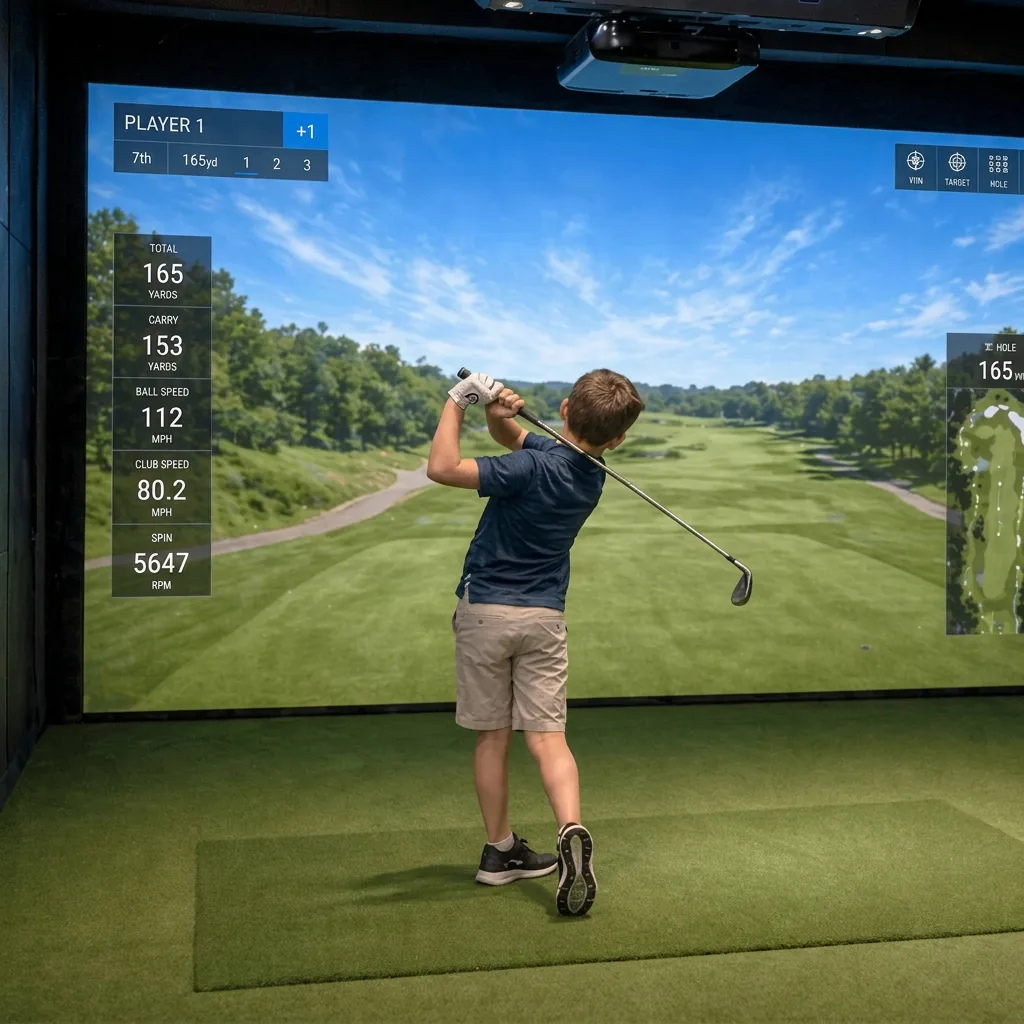
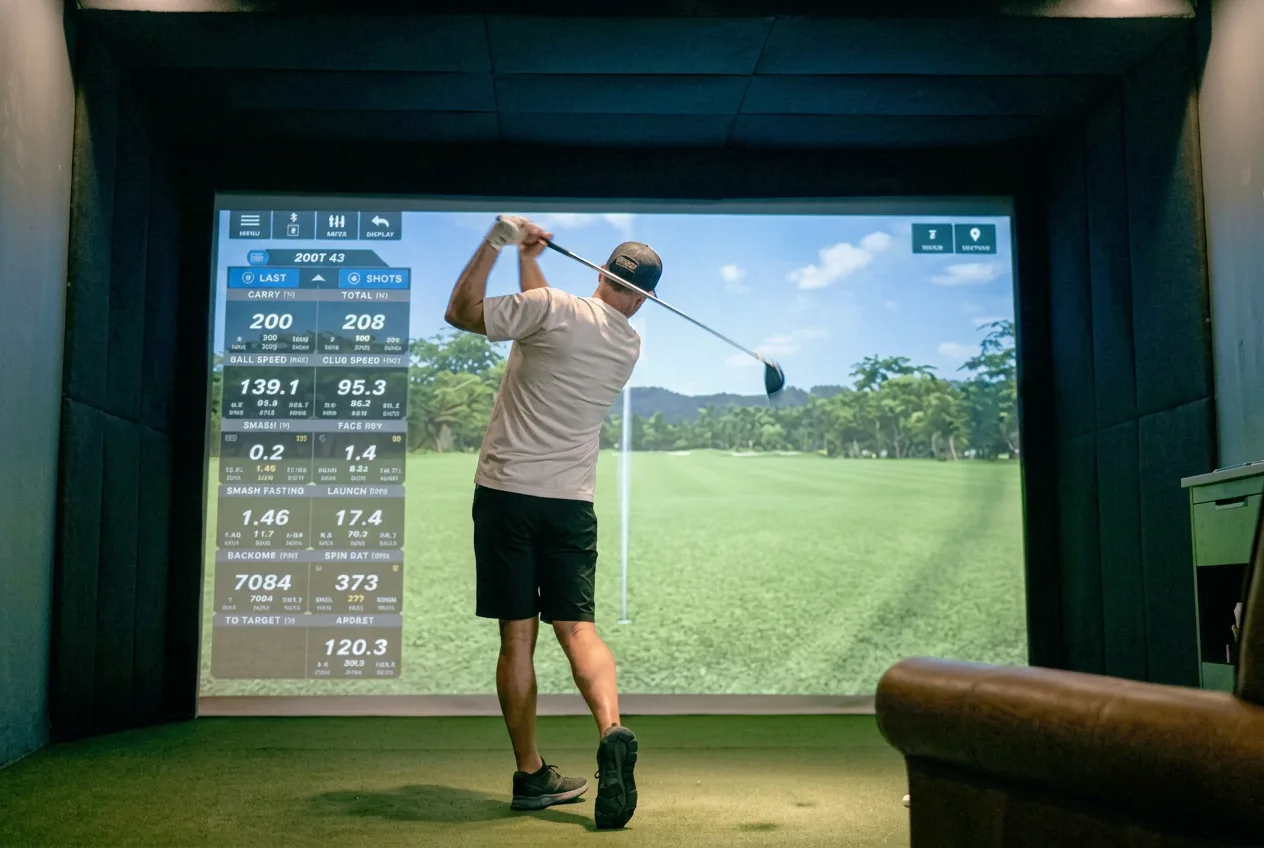
We use Foresight launch monitors for a simple reason: the data is non-negotiable. These are high-speed, quadrascopic camera systems that measure the golf ball and club head with incredible precision. We're not guessing. We get instant, actionable feedback on over a dozen data points for every single swing.
* Club Head Data: Club head speed, angle of attack, club path, face angle.
* Ball Data: Ball speed, launch angle, back spin, side spin, carry distance.
These aren't just numbers on a screen. This is the DNA of your ball flight. When a player says, "I keep blocking my irons to the right," I can look at the data and see why. Is the club path too far from the inside? Is the face open to the path at impact? The objective data from the simulator eliminates guesswork and allows us, as coaches, to pinpoint the exact technical flaw that needs work.
### The Environment: Zero Distractions
Our indoor facility is climate-controlled, private, and quiet. You get a perfect lie every single time. There’s no waiting for a spot, no one talking in your backswing, no worrying about the group behind you. This controlled setting allows for what I call deliberate practice.
Instead of mindlessly beating balls, we can isolate a single variable. For example, we can spend 30 minutes working solely on moving your club path from 4 degrees out-to-in to a neutral 0 degrees. With the instant feedback from the simulator, you feel the change, see the result on the screen, and see the numbers confirm the improvement. That’s how you build lasting muscle memory. That’s how you get 1% better.
### The Coach: Translating Data into Feel
This is the most critical piece. A top-tier golf simulator on its own is just a tool. A simulator paired with an expert coach is a transformational experience. My team—myself, Austin Lim, Steven Zavala, and Sam Schmidt—doesn't just read you the numbers. We interpret them.
We use high-speed video analysis synchronized with the launch monitor data. We can show you, frame-by-frame, what your body is doing at the exact moment of impact and how it corresponds to the data. We connect it back to your physical capabilities, identified through TPI screening. Maybe your open clubface isn’t a hand problem; maybe it’s a thoracic spine mobility issue that prevents you from rotating correctly. The simulator flags the symptom, and our coaching process uncovers the root cause.
A Structured Simulator Session Beats a Bucket on the Range
If you find yourself in a simulator bay, don't just pull out the driver and try to break your personal ball speed record for an hour. Use the technology to your advantage with structured practice.
Wedge Gapping: How far do you really* fly your wedges? Spend an entire session hitting 10 shots with each wedge to precise targets: 50, 65, 80, 95 yards. Use the simulator's reporting to find your average carry distance, not just your one "perfect" shot. Knowing that your sand wedge flies exactly 87 yards, not "around 90," is how you start sticking it close on the course.
* Shot Shaping: Use the visual ball flight tracer to practice hitting a 5-yard draw and a 5-yard fade on command. The data will show you exactly how your club path and face angle need to change to produce those shots. This is nearly impossible to practice effectively on an open range.
* Pressure Practice: Use the "Closest to the Pin" challenge modes. Set it to a tricky Par 3, like the 17th at TPC Sawgrass. Hit 10 shots and see how many you can put on the green. This simulates the mental pressure of a real round and trains you to execute under duress.
The Austin summer doesn't have to mean your game goes on hiatus. In fact, it's the perfect opportunity to move your practice indoors and build a more reliable, data-driven golf swing. Stop fighting the heat and start making real, measurable progress in a controlled environment. The work you do in our indoor bays in July will pay dividends when you're playing Austin's best courses in the beautiful fall weather.
If you’re tired of guessing and ready to build a game based on facts, not feelings, we’re here to help. Book a New Student Assessment at our facility at Balcones Country Club and see for yourself what a data-driven approach can do for your game. If you're looking for a structured plan you can use anywhere, check out our Virtual Academy. Let's start the journey to getting 1% better, every single day.
You can reach us at the academy at Beyond Golf Performance, 8600 Balcones Club Dr, Austin TX, 78750, or call us at (737) 537-2117 to find out more.