The Driver Fitting That Changed Everything
The driver is the most important club in the bag for one simple reason: it sets up everything else. A good drive in the fairway means an iron from a flat lie into the green. A bad drive means punching out of trees, chipping from rough, and grinding for bogey.
Despite this, most golfers have never been properly fitted for a driver. They're playing a loft that doesn't match their launch conditions, a shaft that doesn't match their swing speed, and a head that fights their natural tendencies instead of complementing them.
In this 36-minute deep dive, I go through a complete Titleist driver fitting — and the results genuinely surprised me.
Where I Started
I began with my existing driver — a setup I'd been gaming for over a year. Club speed was 112 mph, ball speed 164, launch angle 11.8°, spin rate 2,900 rpm, carry 275 yards, total distance 295. Solid numbers by any measure. But that spin rate at 2,900 was higher than optimal for my speed, and the launch angle was slightly low. In theory, dialing in those two variables alone could add 10–15 yards without swinging any harder.
Testing Heads
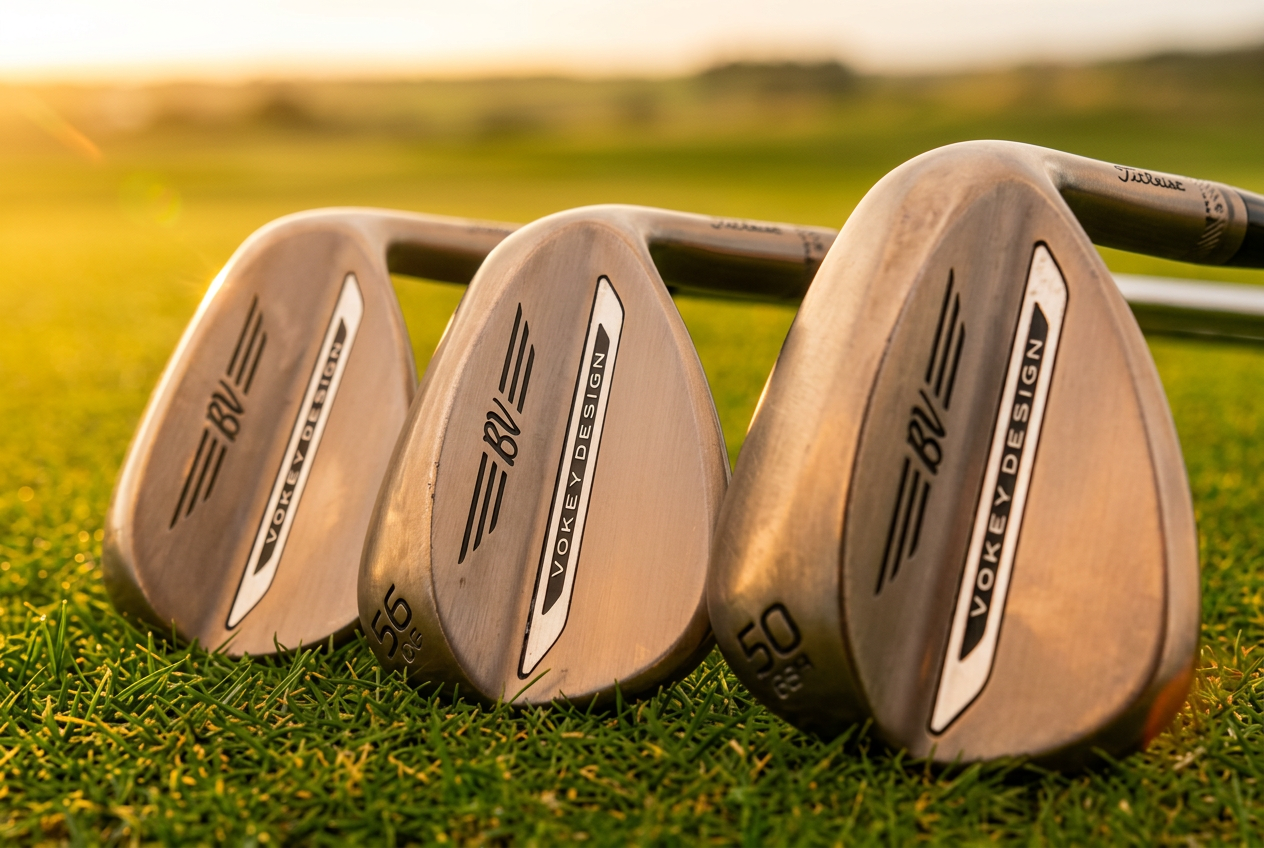
Titleist's GT Series offers three distinct driver heads. The GT3 is low-spin and workable with a compact profile that sits slightly open at address — designed for golfers who want maximum workability. The GT2 has higher MOI with a draw-bias option, more forgiving on off-center hits with a deeper CG for higher launch. And the GT280 is their "mini driver" — a 280cc head that sits between a driver and a fairway wood, with a shorter shaft for more control and surprisingly long for players with enough speed.
I tested all three with the same shaft to isolate head performance. The GT3 felt like it was built for my eye. Compact, clean, and the ball came off with that low, penetrating flight I've always preferred.
The Shaft Experiment
This is where the fitting got really interesting. Using the GT3 head, I tested four different shafts, and the differences were dramatic. The best shaft produced 8 more yards of carry than the worst — with the same head and the same swing. Shaft weight, profile, and tip stiffness all contributed to changes in launch, spin, and dispersion.
The winning combination was a shaft that produced slightly higher launch with lower spin — that ideal "high launch, low spin" window that maximizes carry distance. It's counterintuitive. Most golfers think a stiffer, heavier shaft is always better. Sometimes the club that feels a little lighter and a little softer actually performs best on the monitor.
The Loft Discovery
Modern drivers have adjustable loft sleeves, but most golfers set them once and forget. I tested three loft settings with the winning head and shaft combination. At standard 9.0°, I carried 276 with 2,600 spin. At +1 (10.0° effective), I carried 282 with 2,450 spin. At -1 (8.0°), carry dropped to 270 with spin jumping to 2,850.
The +1 setting was the clear winner, and the reason is something most golfers don't expect. By increasing the loft by 1°, launch angle went up, but spin actually went down — because the higher launch reduced the need for backspin to keep the ball airborne. More loft produced longer drives. I know that sounds backwards, but for many swing speeds, it's exactly how the physics work.
The Final Build
After 36 minutes and dozens of measured drives, the final setup was the Titleist GT3 at 9.0° adjusted to +1 for 10.0° effective loft, with the optimized shaft, standard 45.5" length, and a Golf Pride Tour Velvet grip. Final numbers: club speed stayed at 112 mph, ball speed jumped to 167 — 3 mph gained from better smash factor alone. Launch angle improved to 13.2°. Spin dropped to 2,350 rpm. Carry went to 285. Total distance: 308 yards. That's 13 more yards of total distance from the exact same swing speed. Nothing else changed except the equipment.
What This Means for Your Game
Don't fear higher loft. If your spin is above 2,800 rpm, try adding loft — you'll almost certainly gain distance. Treat the shaft as the engine of the club, not an afterthought. A $50 fitting fee that finds the right shaft is worth more than a $200 upgrade to a newer head with the wrong shaft. And always test with data, not feel. Some of my best drives by the numbers didn't feel like my best swings. Launch monitors remove bias and reveal the truth.
One more thing — the GT280 mini driver is legitimately impressive. For golfers who struggle with driver consistency, it offers about 90% of the distance with twice the accuracy. It's the secret weapon nobody is talking about.
Watch the full 36-minute fitting above to see every data point and every comparison.