Why Iron Fitting Matters More Than You Think
Most golfers buy irons off the rack. They pick a set because it looks good, because a tour player uses it, or because it was on sale. And most golfers leave 10–15 yards of distance and significant accuracy on the table because of it.
A proper iron fitting isn't about buying the most expensive set. It's about matching the club head, shaft, lie angle, and loft to your swing — so that the club does what you intend, every single time.
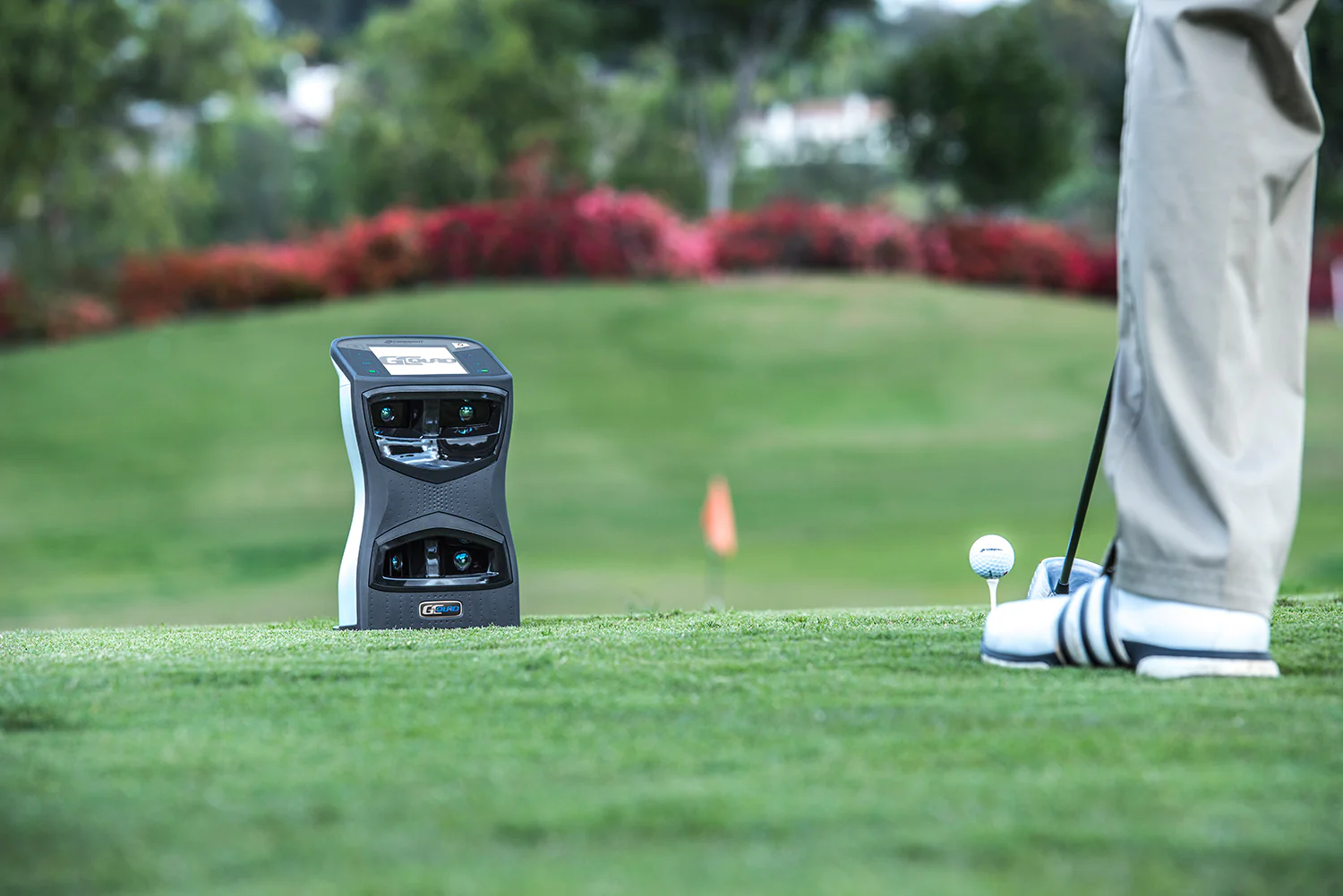
In this 45-minute video, I go through a complete Titleist T-Series iron fitting at the BGP studio using Foresight Sports launch monitor technology. Every number is captured. Every comparison is shown. Nothing is hidden.
Establishing the Baseline
Before trying anything new, I hit 10 shots with my current gamer 7-iron. Club speed came in at 87 mph, ball speed at 121, launch angle at 19.2°, and spin rate around 6,800 rpm. Carry was 172 yards with a 12-yard dispersion spread. Solid, but I knew there was room to tighten things up. These numbers became the benchmark — every new club had to beat them or at least match them.
Choosing the Head
Titleist offers multiple models in the T-Series lineup, each designed for a different player. The T100 is a tour-level blade — maximum workability, minimal forgiveness, built for single-digit handicaps who prioritize feel and shot shaping. The T150 is a players cavity-back that blends feel and forgiveness with a slightly larger footprint. The T200 brings more game-improvement features — offset, wider sole, faster ball speeds — aimed at mid-handicappers who need help getting the ball airborne. And the T350 is maximum game improvement, the most forgiving and highest launching option.
I tested the T100 and T150 head-to-head, hitting 10 shots with each. The T150 won. Not because the T100 wasn't beautiful to hit — it was — but because the T150 gave me nearly identical feel with noticeably tighter dispersion on off-center strikes.
The Shaft Experiment
The shaft is arguably more important than the head. It controls feel, trajectory, and consistency on every swing. I tested three options: the Project X LZ 6.0 for mid-launch with low spin and a firm feel, the True Temper AMT Black with its descending weight profile for consistent feel across the set, and the KBS Tour V 120 for a mid-launch, mid-spin, smooth feel.
Each shaft was hit with the same T150 head to isolate its effect. The differences were real. The AMT Black produced the tightest dispersion and the most consistent spin numbers across all 10 shots. It felt effortless — like the club was doing the work instead of fighting me.
Lie Angle and Loft
Using impact tape and launch monitor data together, we adjusted lie angle to make sure the sole sat flush at impact. Even 2° off can push or pull the ball 5–10 yards offline on a full iron shot. Then we checked loft gapping across the entire set to make sure there were consistent distance steps between each club. No dead zones, no overlaps.
The Final Build
After 45 minutes and over 80 measured shots, I settled on the T150 head with True Temper AMT Black S300 shafts, lie angle 1° upright, and Golf Pride Tour Velvet midsize grips. The results spoke for themselves: 3 yards more carry than baseline, an 8-yard dispersion spread down from 12, and more consistent spin at 6,400 rpm average with only a 200 rpm standard deviation compared to 500 rpm with my old clubs.
What Most Golfers Get Wrong
The biggest mistake I see is fitting for maximum distance. The T200 actually carried 5 yards further for me — but the T150 had half the dispersion. On the course, tight dispersion beats extra distance every time. You don't remember the one 7-iron that carried 180. You remember the three that went exactly where you aimed.
The second mistake is not testing shafts. Many golfers focus entirely on the head and treat the shaft as an afterthought. In this fitting, the difference between the best and worst shaft was 8 yards of carry and a 30% change in dispersion. The shaft matters at least as much as the head.
And the third is skipping the gapping session. Your irons need consistent distance gaps — typically 10–12 yards between each club. Without checking this, you end up with dead zones where two clubs go the same distance and 20-yard gaps where nothing fits.
Should You Get Fitted?
Yes. Whether you're a 25-handicap or a scratch player, a proper fitting with launch monitor data will improve your consistency, your confidence, and your scores. You don't need to buy the most expensive set. You need to buy the right set — the one that matches your swing speed, your delivery, and your tendencies.
Watch the complete 45-minute fitting above to see every number and every comparison.