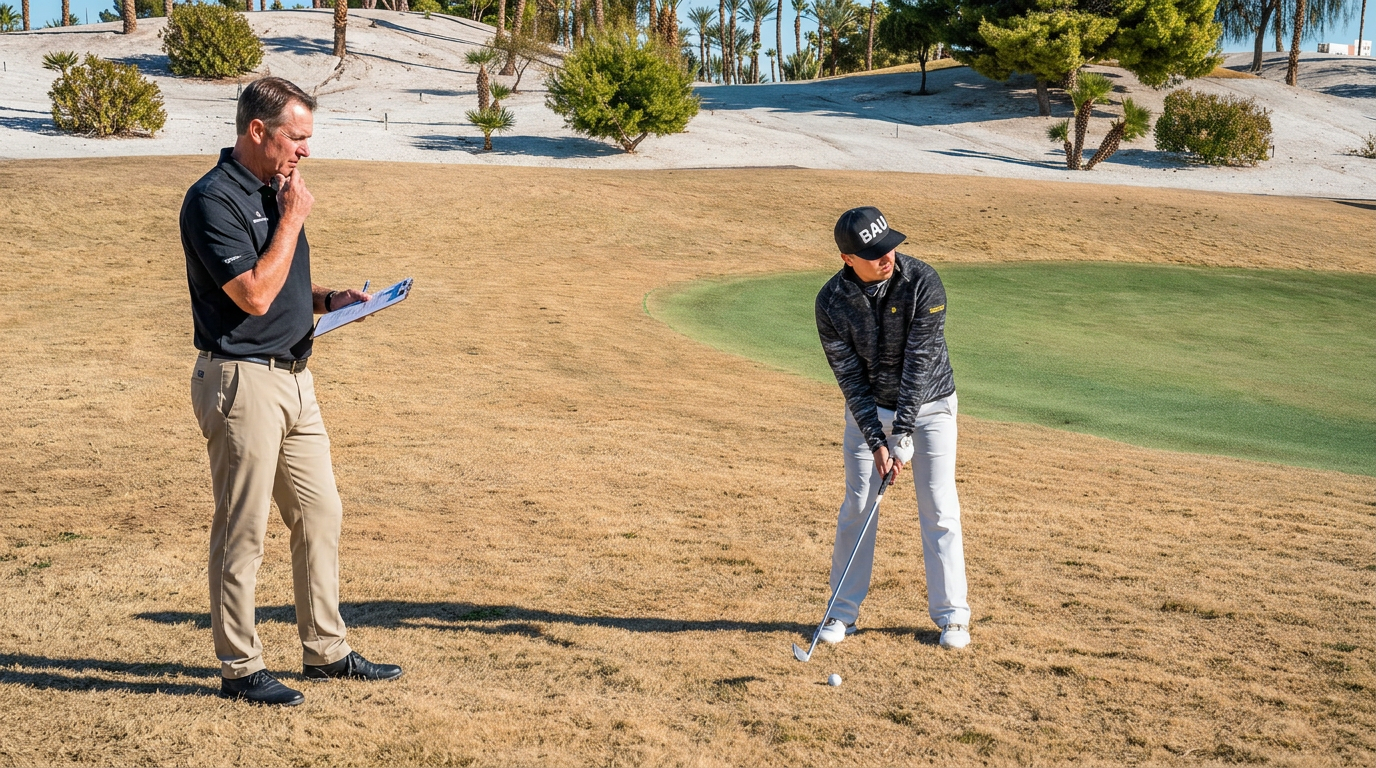
Golfers are often amazed at how quickly a good coach spots the issue they've been fighting for years. It isn't magic. It's a process. Here's the step-by-step approach our coaches at Beyond Golf Performance use.
Step 1: Read the ball flight
The ball tells the story. Where it starts, how it curves, how high it flies, and how solid it sounds all point to what happened at impact. A shot that starts left and curves right says something very different from a shot that starts right and curves further right.
Step 2: Measure impact
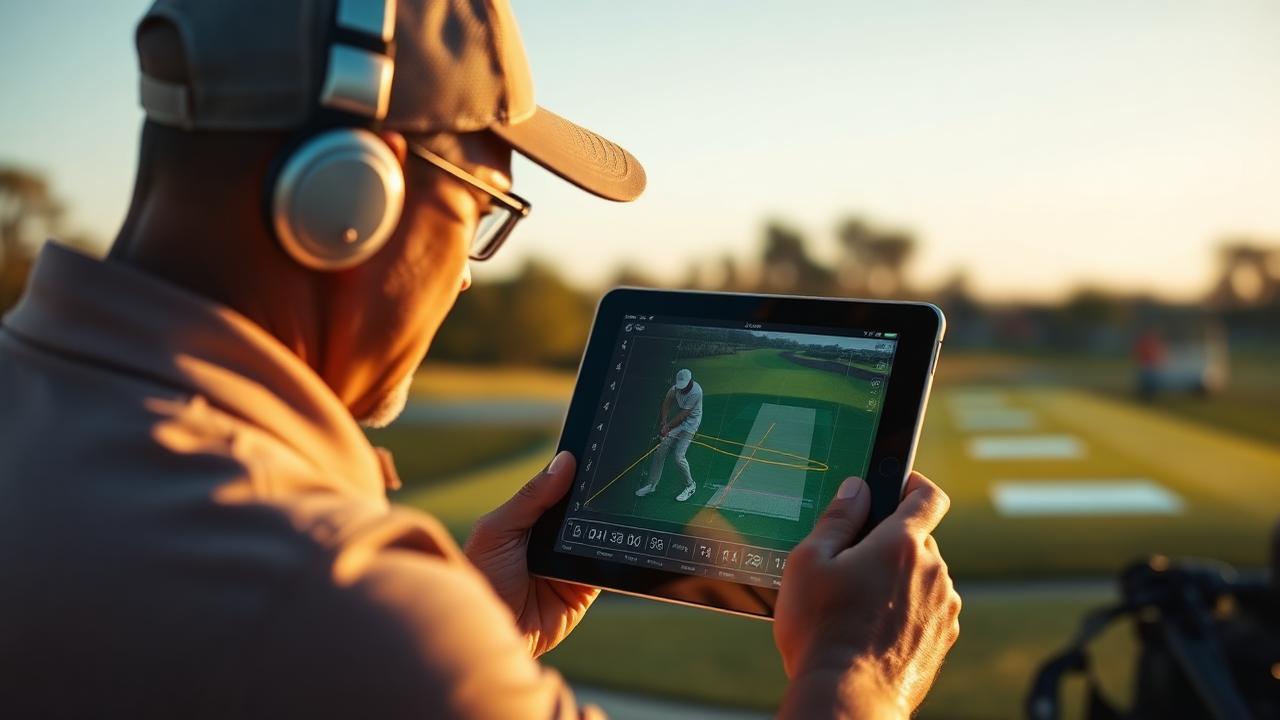
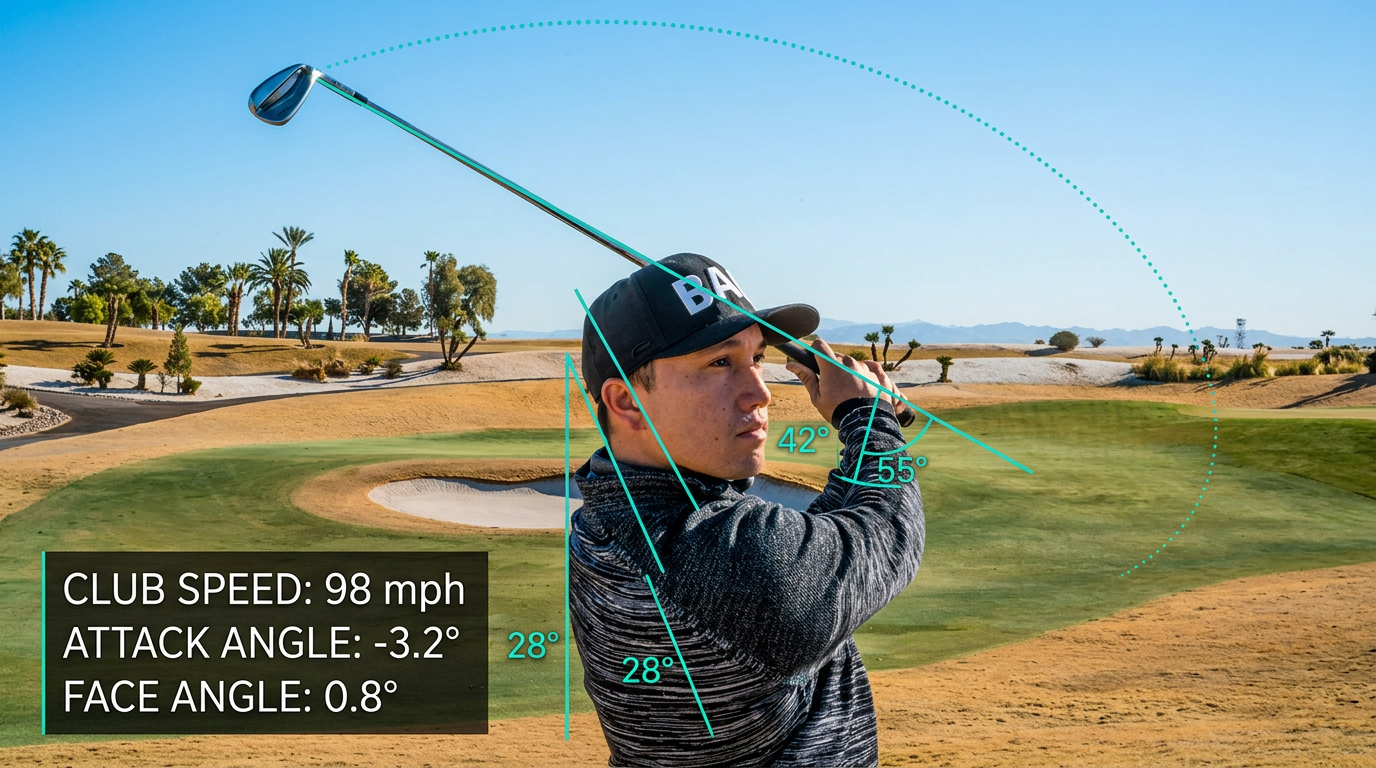
We use TrackMan to confirm what the eye sees. Key numbers include:
- Club path: the direction the club is moving at impact
- Face angle: where the face points at impact
- Attack angle: whether the club is moving down or up into the ball
- Low point: where the club bottoms out relative to the ball
- Strike location: where on the face the ball made contact
We always teach from impact. Everything else in the swing matters only because of how it affects that moment.
Step 3: Assess the body
Next, we look at your body. Through a TPI screen, we test mobility, stability, and strength. We check setup angles first, then balance, then how your body moves or can't move. Many swing problems are really body problems. If you can't rotate your hips, your arms will find another way to swing, and that compensation shows up as a swing fault.
Step 4: Find the root cause
Now we connect the dots. Your slice might come from an open face. That open face might come from a cupped lead wrist, which we can measure with HackMotion. That wrist position might come from your grip. We trace the problem back to its source.
Step 5: Prioritize
Most golfers have several issues. We pick the one that will make the biggest difference first, usually following our three principles: low point control, the club path and face relationship, and lag for power.
Step 6: Prescribe the fix
Fixes come in a few forms:
- Setup changes: grip, posture, alignment, ball position
- Drills: exercises that train the new motion
- Feels: a sensation you can recreate on your own
- Physical work: mobility or stability exercises when the body is the limiter
Step 7: Test and transfer
We check the data again to confirm the change worked. Then we move from drills to full swings, to targets, and finally to the course, where the fix has to hold up under real conditions.
Get your swing diagnosed
We coach golfers from Austin, Cedar Park, Leander, and Georgetown at Balcones Golf Academy.
Book at beyondgolfperformance.com/book.